Vitamins and minerals essential for cellular function and metabolic health.
Micronutrients are organic and inorganic compounds required by the human body in small quantities to support essential physiological processes. Unlike macronutrients, micronutrients do not provide energy but are critical for enzyme function, immune response, bone health, and countless metabolic processes.
Micronutrient requirements vary based on age, sex, physiological state, and activity level. Meeting micronutrient needs typically requires consuming nutrient-dense foods rather than relying on concentrated supplements.
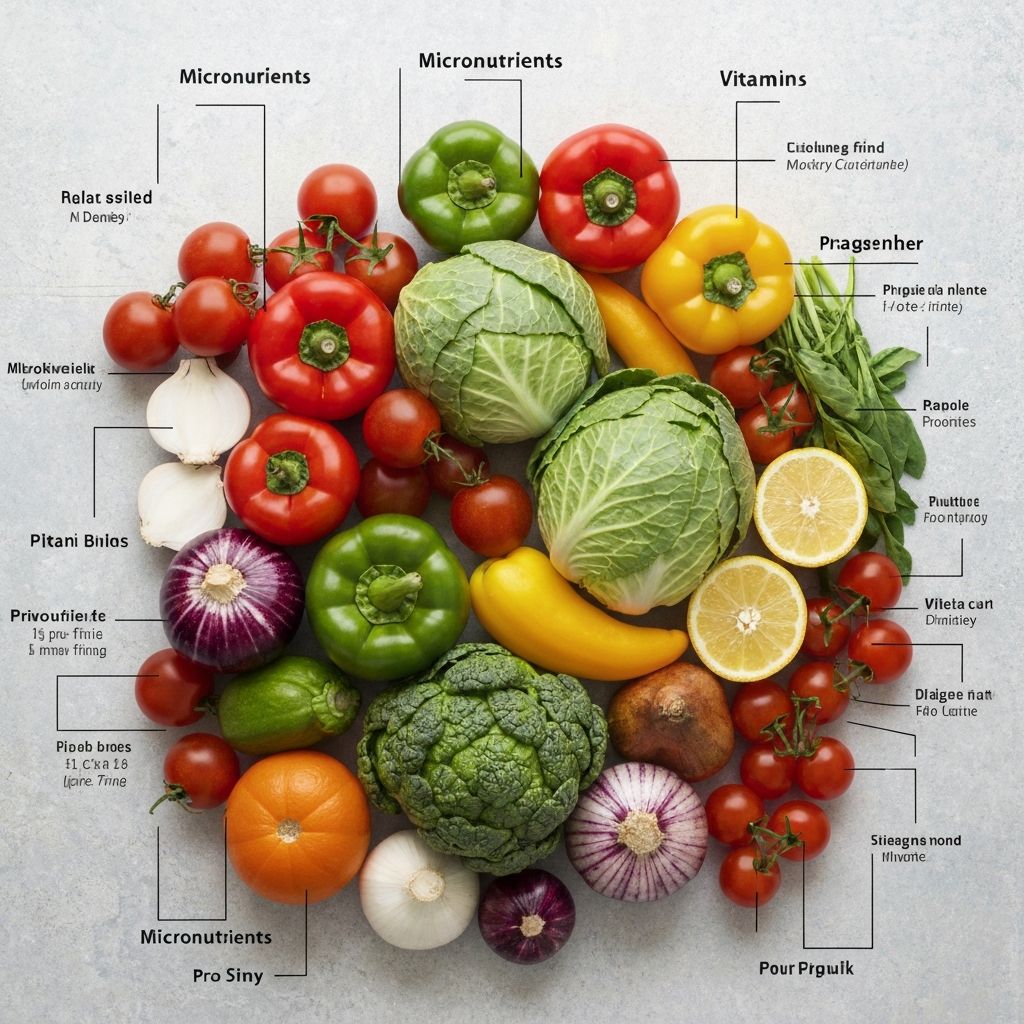
Vitamins are organic compounds classified as fat-soluble (vitamins A, D, E, K) or water-soluble (vitamin C and B-complex vitamins). Fat-soluble vitamins are stored in body fat; water-soluble vitamins require more frequent dietary intake.
Minerals are inorganic elements essential for bone structure, muscle function, nerve transmission, and enzyme cofactors. Key minerals include calcium, phosphorus, magnesium, sodium, potassium, and trace minerals.
Micronutrient bioavailability—the proportion of a nutrient that is absorbed and utilized—depends on food source, preparation method, and individual factors. Plant-based minerals often have lower bioavailability due to anti-nutrients like phytates and oxalates.
Meeting micronutrient needs typically requires consuming a variety of whole foods rather than depending on single foods or supplements.
Current scientific consensus emphasizes food-first approaches to meeting micronutrient requirements. Whole foods provide not only vitamins and minerals but also phytonutrients, fiber, and other beneficial compounds not found in isolated supplement forms.
Nutrient-dense foods—those providing substantial micronutrients relative to caloric content—include leafy greens, cruciferous vegetables, legumes, nuts and seeds, whole grains, and fish. Consuming diverse foods ensures comprehensive micronutrient coverage.